
authority, relevance, and real value. In 2026, the most effective backlinks come from
high-quality sources — not volume. Google’s guidelines confirm that trustworthy websites
linking to your content remain one of the most important ranking signals.
(Google Search Central)
Link building in 2026 continues to be one of the strongest ranking factors in Google’s algorithm.
However, the methods that worked years ago — bulk links, spammy directories, and random guest posts —
are no longer effective. Google’s AI-driven evaluation now prioritizes authenticity,
contextual relevance, and editorial quality.
At Growth Pulse, a
digital marketing agency in Cyprus
,
we focus on strategic link building that strengthens long-term authority. When combined with strong
SEO services
,
these strategies create sustainable organic growth across competitive industries.
2. Relevance Matters More Than Ever
Google’s AI now analyzes topical relevance deeply. A link from a related site in your industry has
significantly more value than a random high-DR website.
- Prefer links from sites in your niche or sector.
- Avoid unrelated categories, even if the DR is high.
- Ensure the content around your link aligns with your topic.
Relevance strengthens topical authority, helping your website rank for more keywords within your industry.
3. Create Assets Worth Linking To
The easiest way to earn natural backlinks in 2026 is by creating high-value content assets.
These resources attract links organically because they provide genuine value.
- Industry reports and research.
- Data-backed articles and case studies.
- Interactive tools, calculators, or templates.
- Guides, comparison studies, and long-form educational content.
Content that solves problems or explains complex topics tends to attract the highest-quality links.
4. High-Quality Guest Posting
Guest posting remains one of the most reliable link-building strategies — when executed correctly.
In 2026, success depends on focusing on quality, not volume.
- Pitch valuable topics to reputable, relevant websites.
- Avoid paid link networks or low-quality blogs.
- Include natural, contextual links within the content.
Google rewards editorial links that are earned, not purchased.
5. Trusted Directories & Niche Listings
While old-style directories are outdated, trusted niche directories still provide strong value.
These include industry-specific platforms, local business listings, and premium review sites.
- Google Business Profile
- Clutch, Sortlist, and industry-based directories
- Chambers of commerce and local listings
These platforms help increase both authority and referral traffic when used strategically.
6. Relationship-Based Outreach
In 2026, link building is becoming more relationship-driven.
Building long-term partnerships with creators, webmasters, and niche businesses unlocks
sustainable link opportunities.
- Reach out to relevant bloggers and industry experts.
- Collaborate on interviews, podcasts, and co-written articles.
- Offer valuable insights, data, or contributions.
Authentic relationships produce higher-quality editorial links over time.
7. The Future of Link Building in 2026
Link building will continue shifting toward quality, authenticity, and user value.
Google’s AI will increasingly evaluate intent, content depth, and semantic relevance.
- Context will become more important than metrics.
- Editorially earned links will hold the highest value.
- AI-assisted link research will become standard practice.
- Websites with strong topical authority will rise in rankings faster.
The most effective strategy is to produce excellent content and develop industry relationships.
8. Link Building for Businesses in Cyprus: What Works Locally
Cyprus is a small market, so the number of strong, relevant websites is limited. That is exactly why a few good local links can make a visible difference. From our own research and campaigns, these are the sources that bring real value to Cypriot businesses:
- Local news and business publications. Sponsored or editorial articles on established Cypriot news sites. When we asked for prices in October 2026, sponsored articles on well-known Cypriot news websites ranged roughly from €250 to €550 per article. One strong article usually beats dozens of cheap links.
- Universities, colleges and associations. Profiles of lecturers or partners, event pages and scholarships on educational websites are trusted, relevant links.
- Chambers of commerce and professional bodies. Member directories of local chambers and industry associations add authority and local relevance.
- Local partners and suppliers. Businesses you already work with (developers, hotels, accountants, software partners) can mention and link to you naturally.
- Google Business Profile and local citations. Consistent business name, address and phone number on trusted directories supports both local SEO and Google Maps rankings.
9. Links to Avoid: Red Flags We See in Audits
Some link offers look attractive but put your website at risk. These are the warning signs we look for before recommending any placement:
- Hidden domains. Marketplaces that show you metrics but hide the actual website until you pay. If you cannot check the site, you cannot judge its quality.
- “Write for us” sites that accept any topic. If a site publishes casino, crypto and dentistry articles side by side, Google sees it as a link seller.
- No real traffic. High Domain Rating with almost no organic visitors usually means the authority is artificial.
- Packages of “100 backlinks” for a low price. These come from private blog networks or spam directories.
- Exact-match anchor text everywhere. Natural links use your brand name, your URL or descriptive phrases, not the same keyword every time.
Google is clear that links bought to manipulate rankings are against its
spam policies.
Paid placements are fine for visibility and traffic, but they should be marked with rel="sponsored".
10. How to Measure Link Building Results
Domain Rating alone does not tell you whether link building is working. Track these instead:
- Rankings of the page you are linking to, for the keywords that bring customers.
- Referral traffic from the linking websites in Google Analytics 4.
- The Links report in Google Search Console, to see which sites Google has actually recognised.
- Enquiries from organic search: calls, forms and WhatsApp messages. This is the number that matters.
Frequently Asked Questions About Link Building
How many backlinks does my website need?
There is no fixed number. In a small market like Cyprus, five to ten relevant, high-quality links to your key pages can be enough to move rankings. Compare yourself with the pages that rank in the top three for your main keyword.
Are paid links allowed?
Paying for an article on a real publication is allowed, but the link should be marked as sponsored. Buying links only to pass ranking power is against Google’s guidelines and can lead to penalties.
How long do backlinks take to work?
Usually between four and twelve weeks after Google crawls the linking page. Links to pages that already have good content work much faster than links to thin pages.
Is local link building different from international link building?
Yes. For local businesses, relevance to the location matters as much as authority. A link from a Cypriot news site or chamber of commerce is often more valuable for “Paphos” or “Limassol” searches than a link from a large international blog.
About the author: Stavros Christodoulou is the founder of GrowthPulse and a part-time Lecturer in Digital Marketing at Neapolis University Pafos and CDA College. Updated October 2026.
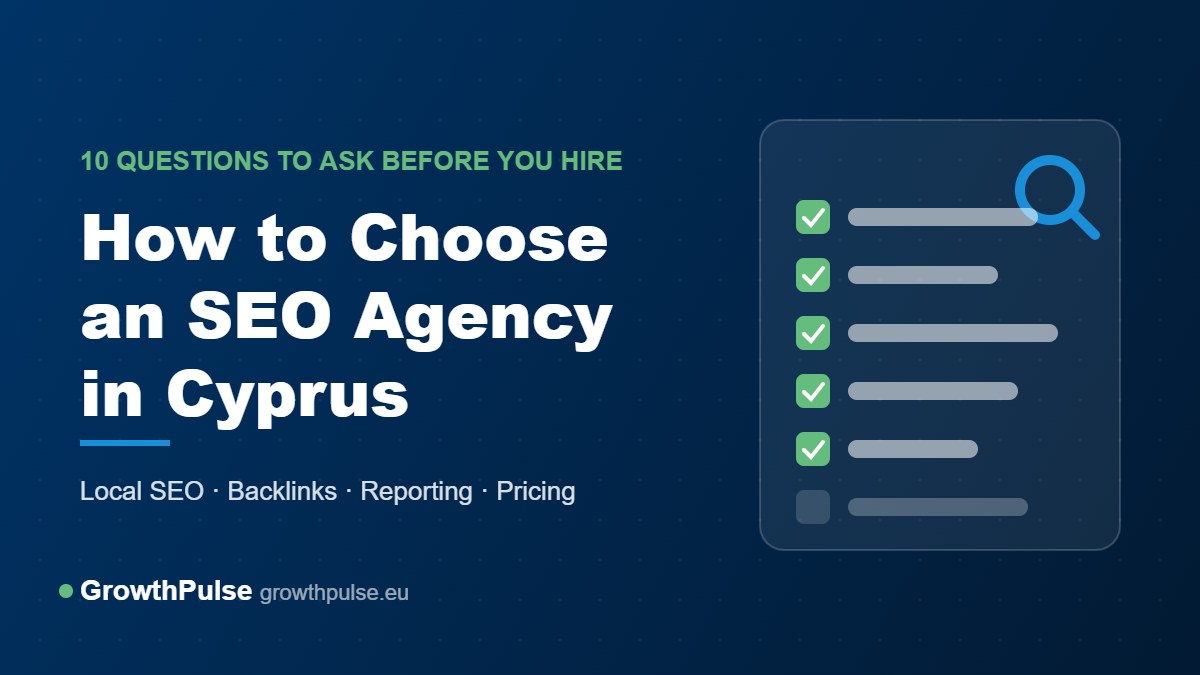
Related reading: How to choose an SEO agency in Cyprus.
Conclusion
Link building in 2026 requires a strategic, quality-first approach.
Businesses that invest in relevance, authority, and value-driven content will continue to see
long-term improvements in organic rankings.
To strengthen your SEO performance with high-quality link strategies, explore our
SEO services
or contact Growth Pulse — your trusted
digital marketing agency in Cyprus
.